
Sustainable Pallet Options Compared: Used, Composite, Plastic and New Timber
Sustainable Pallet Options Compared: Used, Composite, Plastic and New Timber
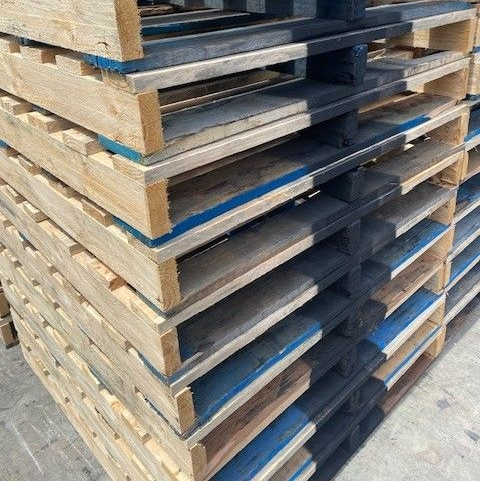
Choosing a sustainable pallet isn't about picking one material and sticking with it. Each option has different strengths, and the most sustainable choice depends on what you're moving, how far it's going and how many times the pallet will be used. Here's how the main options compare.
Used and reclaimed pallets have the lowest environmental impact per trip because the timber has already been harvested and milled. They're the most common choice for domestic storage, general freight and everyday warehouse work. Their main limitation is consistency: boards vary in age and condition, so they suit operations that don't need perfectly matched pallets. We inspect and repair our
used wooden pallets before supplying them.
Composite pallets combine new structural timber with reclaimed boards. This gives you a pallet that is stronger and more uniform than a reco pallet, while still keeping a meaningful share of recycled timber in the build. They're a practical middle ground for businesses that want to reduce waste without compromising on everyday durability. See our
composite pallets for more detail.
Recycled Pallets Still Perform
A pallet is environmentally friendly when it keeps useful material in use for longer. The most direct way to do that is to reuse timber that has already been harvested and milled, rather than cutting new boards every time a pallet is needed. Reclaimed and recycled pallets do exactly this. Boards are inspected, repaired and reassembled, and any timber that can't be used for pallets is put to another purpose.
Plastic pallets are durable, hygienic and reusable over many cycles, which makes them a good fit for food, beverage and other hygiene-sensitive industries. They're also lightweight and often nestable, which saves space when empty. The trade-off is that plastic is made from petroleum-based material, so the environmental benefit depends on how long the pallet stays in service and whether it can be recycled at the end of its life. For closed-loop distribution where pallets return to the same site, they can be an excellent choice. Browse our
plastic pallets.
New timber pallets are sometimes the only practical option, particularly for export and custom work. Timber is a renewable material, and new pallets can be made to exact specifications, which can reduce damage and returns on sensitive loads.
To keep them sustainable, look for suppliers who source responsibly and who can tell you what happens to pallets at the end of their life. Our
export pallets and
custom timber pallets are built to meet the relevant standards for each job.
Choosing the Right Option
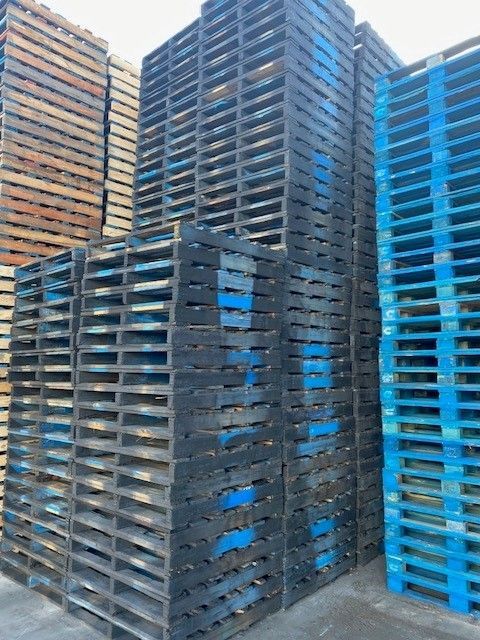
For most businesses, the most sustainable approach is a mix. Use reclaimed or composite pallets for domestic work, plastic for closed-loop hygiene applications and new timber only where export rules or load requirements demand it. Ask your supplier how they handle damaged and end-of-life pallets, because a pallet that is repaired and reused for years usually does more good than one that is replaced early.
Not sure which pallet suits your operation?
Contact Plain Pallets and we'll help you match the right option to your loads, budget and environmental goals.
